
Imagine that, after years of practices and tryouts and weekends spent at games your kid just dropped a bomb you: they don't want to go to soccer practice anymore.
Maybe it's been brewing for weeks - the excuses, the dragging feet, the sudden stomachaches on practice days. Or maybe they just looked at you after last Saturday's game and said flat-out, "I hate soccer."
Now you're stuck. Do you let them quit and worry you're teaching them to bail when things get tough? Or do you make them stick it out and watch the joy drain from something that used to make them happy?
Here's what might help: you're definitely not the first parent in this exact spot. Research shows that 70% of kids quit organized sports by age 13. Soccer gets hit especially hard. But most parents miss something important - when kids say they want to quit soccer, they usually aren't talking about the sport itself.
Before you make any decisions, you need to dig deeper than "I don't want to play anymore."
The Aspen Institute studied this and found something interesting: 36% of kids quit sports because they stopped having fun. Not because they got injured. Not because they weren't good enough. They just stopped enjoying it.
So sit down with your kid and actually ask:
Listen to their actual words. You'll probably hear one of these five things.
They sit on the bench too much. When your kid spends half the game watching instead of playing, soccer stops being fun. They signed up to play, not to be a spectator. If this is what they're telling you, the problem isn't soccer - it's where they're playing it.
The pressure got too intense. Some programs care way more about winning than anyone admits. Coaches yelling, parents stressing, kids feeling like failures when they miss a pass. For kids between 5 and 10, this is backwards. They should be learning skills and building confidence, not worrying about tournament standings.
Practice is boring. Does your kid stand in line half the time waiting for a turn? Do they spend more time listening to the coach talk than actually kicking the ball? Kids zone out fast when practice feels like school. They need to move, touch the ball constantly, and actually do stuff.
They think they're terrible at it. Kids pick up real quick on where they rank compared to teammates. If they've decided they're the worst player, quitting feels like the smart move to avoid embarrassment. But here's the thing - at young ages, who looks "good" often comes down to whose birthday came first in the year, who started earlier, or just normal development timing.
Soccer took over everything. When you're driving to practice four times a week plus weekend tournaments in other cities, it stops being a fun activity. It becomes a part-time job. Kids need time to just be kids.
If your kid's issue is with their current situation, not with soccer itself, letting them quit might cost them a sport they'd actually love somewhere else.
Sometimes what looks like "my kid hates soccer" is really "my kid hates this particular way of doing soccer."
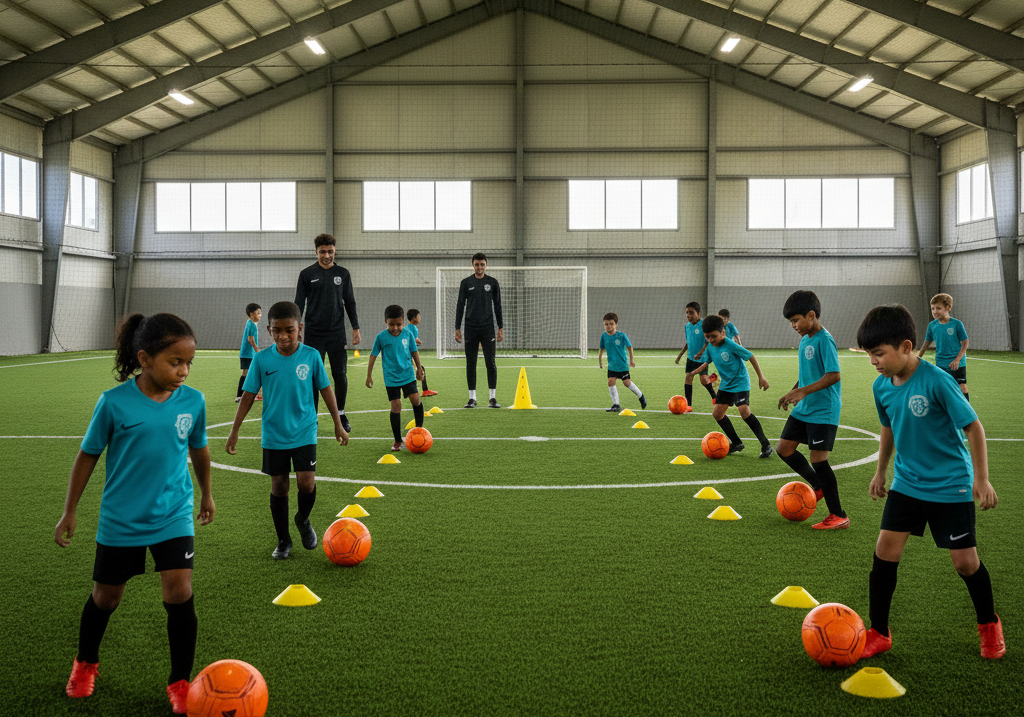
At We Make Footballers, we work with kids ages 4-12, and we see this all the time. A kid shows up to try us out, and their parent says "they wanted to quit their other team." Then that same kid spends the whole session grinning and asking when they can come back.
What changed?
Not the kid.
The environment.
We run our programs completely differently:
Here's what happens: kids who were ready to quit soccer entirely remember why they liked it in the first place.
Look, sometimes quitting really is the right call.
If another kid or coach is bullying them, get them out immediately. Their safety matters more than finishing a season.
If they genuinely show zero interest in soccer anywhere - won't kick a ball around at home, don't watch it, don't talk about it - it might just not be their thing. And that's fine.
If they're drowning in activities and something needs to give, let them pick what to drop.
If they want to try something completely different, exploring helps them figure out what they actually enjoy.
Pick a calm time - not right after a rough practice or game - and be direct.
"I noticed you seem miserable about soccer lately. Help me understand what's going on. Is it soccer itself, or something about how you're playing it now?"
Then actually listen. Don't interrupt, don't problem-solve yet. Just hear them out.
What they say next tells you everything about what to do.
Summer's coming up, and that's actually perfect timing for this. Our summer programs give kids a chance to try soccer in a totally different way without committing to a new team or full season.
Think of it as hitting reset. If they try training that's actually fun and focused on helping them improve, and they still don't like it? Then you know it's really time to move on. But if they come alive again, you just saved them from quitting something they actually love.
Thousands of kids quit soccer every year because they had one lousy experience. Before your kid becomes another statistic, give them a shot at seeing what soccer looks like when it's done right.
Try a free session at the We Make Footballers location nearest you. Let them experience training that actually prioritizes skill development and fun. No pressure, no judgment. Just good coaching built specifically for ages 4-12.
Sometimes the answer isn't quitting soccer. It's finding the right way to play it.

Soccer coaching for children aged 4-12 years old in the US.


We Make Footballers USA LLC